Blurg.

Thoughts along the way...

Page 5 of 6

Money, Money, Everywhere…

An interesting read this morning over the tea and toast from the Chronicle of Higher Education that looks at the astronomical figures that make up the salary line of Div. 1 colleges and universities. Well, not the entire salary picture – my own personal experience has been that most public employees aren’t getting even proportionally outsized salaries. No, those astronomical numbers occur consistently in one department across our nation’s campuses: the athletic department.

Joy Blanchard, an associate professor of higher education at Louisiana State University, calculated the difference between her salary and that of her university’s head football coach at the time, Edward Orgeron … Blanchard wanted to know how long it would take him, at his salary, to earn her salary. The answer? Just 2.6 days.

https://www.chronicle.com/article/colleges-are-paying-big-bucks-for-coaches-heres-what-else-they-couldve-spent-the-money-on

Yes, the story does explain the different pools of money that fund athletics versus the rest of the academic enterprise; it discusses the role of donors to lessen the demand of general funds or tuition revenues to make our sports coaches the highest paid public employees in every state. I get all that.

But I’ve been in higher ed for more than three decades and the reality is that the number of athletics programs that are truly fiscally independent, that don’t exert a downward drag on campus finances is a mere handful.

More often than not, athletics budgets magically show up as “balanced” only because the rest of their host campus foots the bill for additional costs, be they infrastructure (building maintenance, parking structures, silly things like internet, phones, and employer costs for employee health care, workers comp, etc.) or just direct subsidies for academic assistance (often in gated facilities available only to athletic elites, not the general student population who may need them, too…). all the way up to direct repayment of debts incurred because, in many – most – cases the athletics enterprise operates in the red and ultimately the institution is the co-signer on the loan and must make good.

I don’t hate athletics, and have been known to root, root, root for the home teams from time to time, but I find it terribly unsettling where the coach salary arms race has taken us – all of use – in recent years. The numbers we spend in one place versus another say a lot more about our priorities than any W/L columns or championship banners can ever replace.

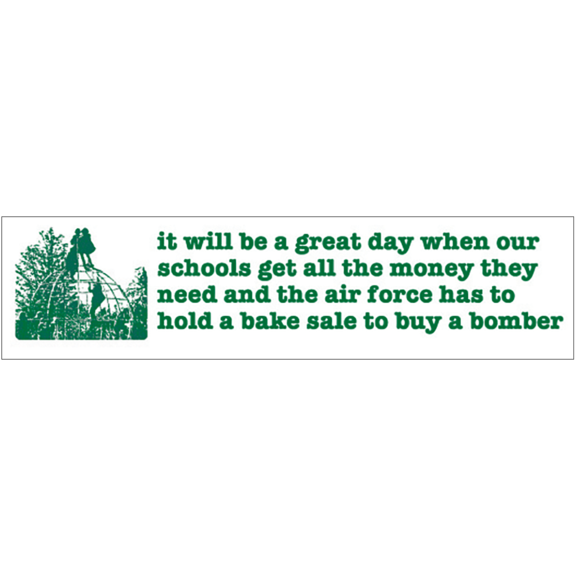
Arms race, Eric?

Sure. Why not? Kinda reminds me of a bumper sticker…
Beyond Zoom

It’s been 628 days (but who counts these things, right?) since the last time I had a guest in my audio booth talking through the ether with distant broadcasters. The last time I fired up the microphones for real was February 27, 2020, to connect a faculty member from our Marine Mammal Institute with CBC’s Quirks and Quarks program to discuss whale skin care. A bit more than two weeks later, we were shut down by a pandemic.

A lot has changed over this time – 21 months! – and some of those changes are in our booth. Back then, our primary broadcast connection to radio stations was an ISDN line, a 1988 technology standard that allowed for high-quality audio connections. (The codec we used was retired in 2018.) Today, for the first time since we went into remote/lockdown/isolation, I’m staring at the controls of a new IP-based audio codec, watching the virtual meters bounce between my studio and the BBC.

The many technologies that supported our remote operations, Zoom being the 800-lb gorilla in our particular sandbox, transformed the way we did our work – all of us. With a Zoom, Teams, or Skype connection, or any manner of audio-over-IP solutions available to broadcasters, the need for a dedicated facility to provide “broadcast quality” audio became more or less moot. To a point.

It was frustrating to me as a listener during the COVID interregnum. Working from home, I had more opportunities to listen live to my favorite radio programs, and would hear sub-standard audio as a regular feature make it on the air. Even our campus had people on programs via cellphones who once would have been in my booth. At times, the way folks used Zoom to get on the radio made a cell connection seem like pristine audio – why producers would take a laptop computer’s shitty microphone in an echoey room over a cell phone baffled me.

But, as a nod to a step towards a return to what will be closer to normal (even if we don’t fully return to normal as we knew it), today I had someone in my booth talking with the BBC. I have another one booked in two weeks.

We’re back on the air, with our folks sounding like they are in a studio again, instead of at their kitchen table. For this, I am grateful.

Boosted

Got a booster shot today. Between age, underlying conditions, and – I think – my job situation, I checked enough boxes to get through the portal and obtain an appointment. And with that little jab I’m now that much more protected here in the pandemic of the unvaccinated and unmasked.

This one was different than the first two; right now, 12 hours later, my arm hurts like heck. The original doses in the spring didn’t seem to affect me much. Maybe it’s because this time around I’m feeling Moderna in my system. Who knows?

I’m just grateful that I am able to say I have taken active, pro-public health steps and done all I can to protect myself and those around me. This whole pandemic thing is starting to get old…

Leaving was easy.

A recent WaPo article tells us that leaving the facething is “Easier said than done.”

[facething] is bad! Nevertheless, more than 2 billion of us are still there — some reluctantly, some enthusiastically. Because even though the platform is a cesspool of toxicity, there are reasons to stay. Maybe it’s the only way you keep in touch with your aunt. Or find out what’s happening in your hometown. Or catch up with gossip from your high school friends. That’s [facething]’s trap: The emotional connections are inextricable from the algorithm that keeps us clicking against our own best interests.

https://www.washingtonpost.com/lifestyle/style/leaving-facebook-is-hard/2021/11/10/90172232-40bc-11ec-a3aa-0255edc02eb7_story.html

It’s easier than you think. First, download your activity to your computer. This gives you a copy on your computer of your account activity, including posts and – important for many – the photos you’ve uploaded over the years. Once you have a copy of your old life, you can deactivate or delete your account.

That’s it. Eventually you’ll not miss it.

Go ahead – give it try!

Science Fiction?

I still read science fiction, just not as much as I did when I was young. Science fiction and fantasy books were what kept me distracted in my early years. I don’t know what started me on that track – maybe it was Star Trek, or the pulp anthologies my dad had around the house, but by the time I was in fourth or fifth grade I’d been through a few of the Dune novels and the Foundation trilogy.

Today, those titles are making it big on the big screens and big streams. I might get to see those at some point, though reluctantly. The sci-fi of my youth never translated well to anything on a screen, at least as far as I’ve ever been concerned. (It is an ages-old complaint when any printed works get adapted for a screen…)

Science fiction as a “thing” has been in the news in the past few years, as billionaires have raced to reach space fifty years after we put a man on the moon. For whatever reason, we’re heard a lot about how Musk and Bezos and even the dread Zuckerberg have been at times “inspired” by the science fiction they read in their youth. How we’ve evolved with science fiction: fantastic gadgets from Star Trek become real inventions, like the imagined communicator to the actual flip phone and now to the pocket computer. And how our tech billionaires are continuing that wave of inspired innovations.

But what science fiction were they reading?

Heinlen, Herbert, Asimov, Bradbury, Pohl…I chewed ’em up, burning through the stacks in the “Browse” section of the library. I especially loved anthologies of short science fiction stories. In, out, move on to the next fantastic idea. As a child in the middle of the cold war, the escapism that many of these authors gave us came straight from the nuclear scares of the 1950’s. Who cared about plot development, when you can recycle the same story over an over again on a strange new world?

During the past year or so I dusted off the spines of a few of the anthologies I, for whatever reason I can’t recall, kept on the shelf all these years. In particular, it’s been interesting to re-read a series entitled The Early Asimov (vols. 1 & 2) in which the prolific author regaled the reader with an almost encyclopedic recitation of what he was doing in his life when he wrote his first works and cashed his first checks as a writer. Reading his earliest stories is almost grimace-inducing, but in a sweet way. Perhaps it’s in the prose he prefaces each story with, something to soften the blow – I imagine if I found any copies of the early pulpers John Campbell filled with those and similar stories, I’d be…underwhelmed.

(Full disclosure: I’ve yet to be published, having not even finished a work, so I suppose, perhaps, I could just sit down and shut up!)

What was fascinating to me, though, in re-reading my post-war sci-fi collections to keep the pandemic at bay, was not the curious contraptions and pseudo-science brought to bear on alien worlds, but the curious portraiture of society these stories gave us. Not very many writers would qualify as “woke” these days; then again, consider their audience, and pulp editors like John Campbell shepherded their writers to feed that particular appetite.

I was thinking about this just the other day, and what happened next was kind of bizarre: our good friends at On The Media just ran a lovely story about this very topic. So rather than follow this little rabbit hole of my own commentary, I’ll suggest instead that you take off from here and give their story a listen.

Day 2 – habits are hard to kick

It’s a lazy-ish Sunday, and instead of looking for cupcakes and a movie, I popped open the lappy and started to go to … that site. Muscle memory? Laziness? Upon seeing the login page, I just shook my head. Old habits, especially those habits that are designed to deliver dopamine hits deep inside one’s brain, are hard to kick.

But I caught myself, shamed myself, and moved on to the newspaper site to which I subscribe so I could check the day’s headlines instead. It’s a better way to see what’s happening in the world that … that site.

Leaving the borg (again)

Tonight I once again suspended my activities on a large (anti)social media site. I’ve downloaded my account, so I have all the inanities I’ve posted, photos I seem to only have located therein, etc.

The account is deactivated now. Maybe, after some time has passed, I’ll delete it. Who knows?

It’s been an interesting ride, but I’ve been weaning myself for a few weeks, and I’m ready to go cold turkey again. My big concern is that I don’t know how to reach many of the folks I’ve come to be in touch with via the (anti)social media behemoth because that’s our only connection. But I can’t worry about that too much. I am, as they say, in the book if someone’s looking for me, I am not hiding underground.

Card and letter use via the mail has and will continue to increase. It takes more time, and it feels better to stick an envelop in the box on the corner and wonder what may happen – or not – and not have to worry about the interval before someone presses the “like” button. There’s no instant gratification in slow pace of the mails, and waiting around for such a thing creates its own stress.

What with all the hubbub and hoo-hah about the behemoth in recent weeks, it’s time to go. The technology is not evil, but the folks running the company have proven themselves time and again to unconscionably put their own growth and valuation above the impacts on the communities their product touches.

I hope you might consider joining me out here in the empty, less-connected wasteland of the rest of the internet. At the very least, I encourage you to spend less time on social media than you do now. You’ll be a better person for it. I say this with conviction, as I did this once for the better part of a year, and probably would have continued away from the beast but for the onset of life during a pandemic.

It’s served it’s purpose. It’s played me, I’ve played in it, and it’s time to grow up and move on. In the meantime, watch this space…

Missing my chance…

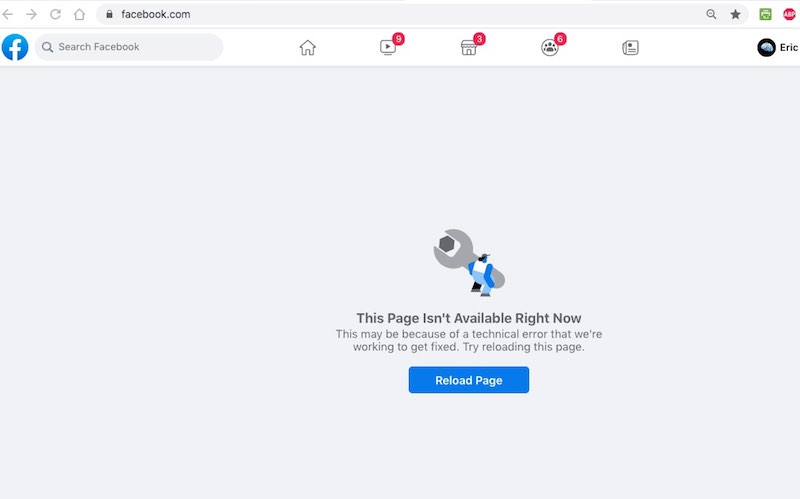
The facething has been down pretty much all day – since about 8:30 this morning (left coast time). And yet, this space is still working.

I feel like the chance to change the face of social media by replacing it with my own empire is slipping through my fingers. But I had a marvelous tomato sandwich for lunch, so I’ll manage. Somehow.

error screen
Slow day on the facething today…

Remembering an old friend

I learned a few days ago that one of the true influencers in my early career had passed. I first met Chip Neal at Ch. 11 (NH Public TV) in the early 1980’s, when I was volunteer at the station. Chip was a producer and director there. He was one of the original producers of NH Crossroads, a weekly program that I would later work on from time to time, but I first got to know him as the guy behind the scenes in fundraising and Auction events.

As a volunteer, I was struck by Chip’s openness and generosity. My first “work” at the station was answering phones during fundraising breaks, and the curious kid I was would wander from the studio to learn more about what happens in a TV station. Chip took the time to answer questions, and, to top it off, he seemed to have a great sense of humor.

I would learn later that a sense of humor was necessary to 1.) work in in television, and b.) have any success at it.

When I first started working for a paycheck at Ch. 11, I learned more about who Chip was and what he did. He was, as I mentioned, a producer/director for NH Crossroads, creating interesting segments that often came about because he saw something interesting in the world and he just plain wanted to share it with others. I had the great pleasure of being his photographer a number of times; we visited a frozen lake and watched cars race around in ice races, went to a county fair on a sweltering summer day to watch oxen pull, explored Houghton’s Hardware in town as adults would explore a toy store, and looked at a few historical markers along the way. Met some interesting people because of Chip.

Chip was highly visible as a Crossroads producer, but most folks didn’t know how much scut work he did for the station. The marquee programs were all well and good, but how many people think of telethons and fundraising TV auctions as TV shows? Well, they are. Especially the annual Auction – let’s face it, if you want to raise money on TV selling stuff, you need folks to be watching, and it’s got to be somewhat entertaining. Chip was one of the behind-the-scenes producers of a lot of material for the Auction, especially “Superboard” items, which were high-ticket items that were presented over the course of the week using produced packages – almost product infomercials. Each year we’d have a car donated to auction off, and one year he made a memorable promotional video for this Superboard item that featured a juggler friend of mine.

What I learned from Chip that was far more valuable to me than basic TV production stuff was mindset. When I went out with Chip to work on a story, it wasn’t work – it was play. It was discovery. And he quite often pushed me to explore with my camera, so it wasn’t just a guy talking to a camera telling us a story. He taught me how to bring the viewer along to play, too. This could be from an icy pond to an Auction set.

In the summer of ’87, Chip was tasked with producing and directing a pilot program with Fritz Wetherbee, titled something along the lines of “Fritz Wetherbee’s Yankee Hour.” It was to be a variety show, with Fritz being Fritz, and Fritz would Fritz with a few guests and a musical group, and include some field segments. And it was for this pilot that Chip packed me along to New Boston to record what is one of my favorite stories of my career, the summer evening when the Rotarians played a round of meadow muffin bingo. What you see below was originally three segments that were dispersed throughout the hour-long pilot; Chip took the three segments and stitched them together for a Crossroads feature. Why not? The Fritz pilot didn’t go anywhere, and there was all this great material…

Thank you, Chip, for helping me learn to tell stories, and to look askance at the world around me. The work you did off-screen meant a lot to folks, and to this day, I think of you often. Godspeed.

Meadow Muffin Bingo in
New Boston, Summer 1987

« Older posts Newer posts »

© 2026 Blurg.

Theme by Anders NorenUp ↑